How Corruption Deepens Exclusion for Women and Persons with Disabilities in Kenya
Corruption is often discussed in terms of lost public funds, weakened institutions, and stalled development. However, for many marginalised communities in Kenya, corruption is not just a governance issue; it is a daily barrier to dignity, opportunity, and survival.
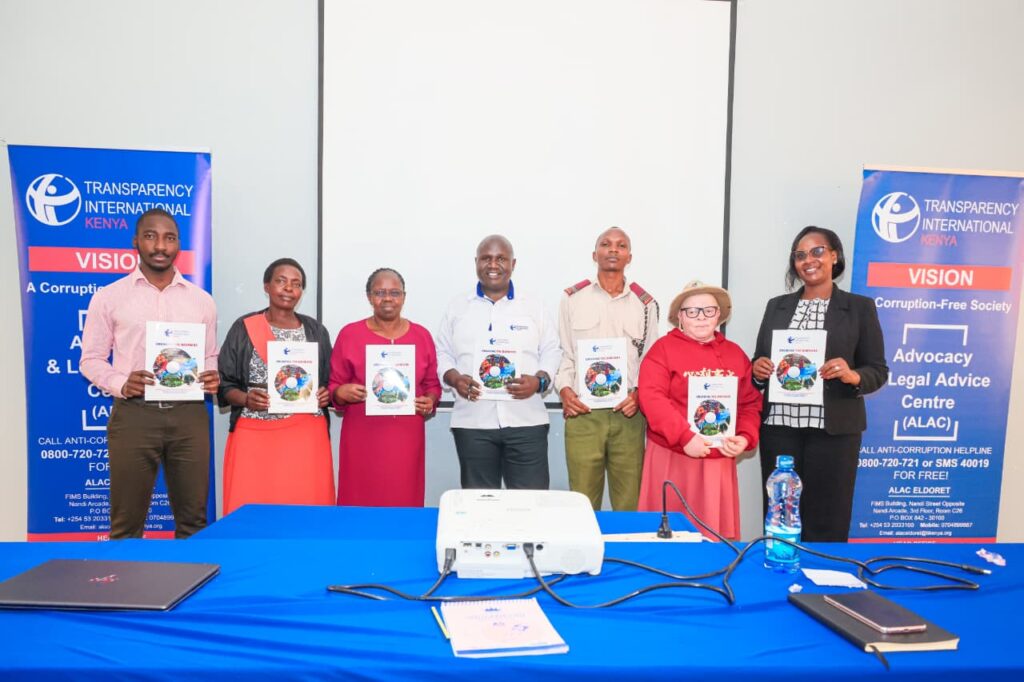
In April this year, TI-Kenya, with support from the TI-Secretariat, launched the Breaking the Barriers: A Report on the Impact of Corruption Marginalised Groups in Nandi and Mombasa Counties report as part of the Gender, Equality and Social Inclusion (GESI) Project. The new study examines the disproportionate impact of corruption on women and persons with disabilities (PWDs) in Nandi and Mombasa Counties. The report highlights how bribery, sexual exploitation, delayed services, and systemic exclusion continue to undermine access to healthcare, education, social protection, economic opportunities, and justice for already vulnerable populations.
The findings paint a troubling picture. In both counties, respondents reported widespread corruption in essential public services including healthcare, education, security, water services, and public administration. In Mombasa County, a majority of respondents described corruption levels as “very high,” with bribery emerging as the most common form of corruption encountered when accessing public services.
For women, the impact is often gendered and deeply exploitative. The report documents cases of sexual corruption, where women are allegedly asked for sexual favors in exchange for bursaries, political endorsements, employment opportunities, or access to services. In Nandi County, women’s groups receiving empowerment grants reportedly faced demands to return up to half of the funds as illegal kickbacks.
Persons with disabilities face equally severe barriers. Many respondents reported delays or denial of services unless bribes were paid, including disability registration, access to assistive devices, healthcare, scholarships, and social protection programs. The diversion of resources intended for accessible infrastructure and disability support further entrenches inequality and exclusion.
The report further reveals that fear of retaliation, inaccessible reporting systems, stigma, and weak whistleblower protections discourage many victims from reporting corruption. This allows corruption to persist with impunity while further eroding trust in public institutions.
Despite these challenges, the study offers a roadmap toward more inclusive governance. Key recommendations include strengthening whistleblower protections, improving accessibility of reporting mechanisms, increasing civic education and legal aid initiatives, mainstreaming disability and gender inclusion in anti-corruption policies, and enhancing accountability at both county and national levels.
Ultimately, the report underscores a critical reality: corruption does not affect everyone equally. Women and persons with disabilities bear a heavier burden because of existing social, economic, and institutional inequalities. Addressing corruption, therefore, requires more than enforcement alone; it demands inclusive governance systems that recognise and respond to the lived experiences of marginalised communities.
By centering the voices of women and persons with disabilities, this study contributes important evidence to ongoing efforts aimed at advancing transparency, accountability, equality, and social justice in Kenya.